廣東話(繁中)
 English
 簡體中文
Dental caries, commonly called tooth decay or cavities, is one of the most widespread chronic diseases in the world. It occurs when bacteria in the mouth break down the sugars in food and drink into acids that gradually dissolve the hard tissues of the teeth, forming holes (cavities).[2][3] Untreated dental caries in permanent teeth is the most common health condition globally according to the Global Burden of Disease, and oral diseases are estimated to affect nearly 3.7 billion people.[4] In Hong Kong, the Department of Health's 2021 Oral Health Survey found that over 40% of 5-year-old children had caries experience, affecting an average of about 2 teeth.[8]
🦷 What Is Tooth Decay?
[ edit ]Tooth decay is the destruction of the tooth's hard tissues — the enamel (the outer surface of the tooth) and the dentine beneath it — by acid. Bacteria in the mouth convert sugars from food and drink into acid, which gradually strips minerals from the tooth and creates a small hole, or cavity.[2][4] Decay can affect people of all ages once they have teeth. Young children are prone to early childhood caries, sometimes called baby bottle tooth decay, which begins in the front teeth; older adults may develop decay on exposed root surfaces as the gums recede.[3]
🧪 How Decay Develops
[ edit ]Tooth decay requires four factors to act together: a susceptible tooth, decay-causing bacteria, sugars (carbohydrates) and time. The bacteria in dental plaque convert free sugars into acids that attack the enamel and cause it to lose minerals, a process called demineralisation.[3][4] When a tooth is repeatedly exposed to acid — for example through frequent consumption of sugary food and drink — the enamel keeps losing minerals, and a white spot may appear where minerals have been lost. This is a sign of early decay.[3] At this stage the process can be stopped or reversed, because the enamel can repair itself using minerals from saliva and fluoride from toothpaste or fluoride treatments. If more minerals are lost than can be restored, the enamel weakens and eventually breaks down, forming a cavity.[3]
⚠️ Symptoms
[ edit ]Early tooth decay usually causes no symptoms, which is why it is easily overlooked.[3] As decay advances, it may cause toothache (especially when eating or drinking), sensitivity to sweet, hot or cold foods, brown or black staining on the tooth, and a hole that may be visible or detectable with the tongue.[2][3] If decay reaches the pulp (the nerve), infection can form an abscess (a pocket of pus), causing pain, facial swelling and fever; in severe cases the tooth may have to be extracted.[2][3]
👨⚕️ Diagnosis and Treatment
[ edit ]Dentists usually detect decay during a routine check-up by looking for white, brown or black staining, probing the tooth for soft or sticky areas, and taking X-rays to reveal decay that is not visible, such as between the teeth.[3][10] Treatment depends on how deep the decay has progressed. Early decay that has not yet formed a cavity can be reversed by applying fluoride to the tooth. Once a cavity has formed, the tooth is restored with a filling: the dentist removes the decayed tissue and fills the tooth with a filling material such as composite resin or amalgam.[3] If decay reaches the pulp, root canal treatment followed by a crown may be needed; extraction is reserved for teeth that are too damaged to be saved.[2][10]
🪥 Prevention
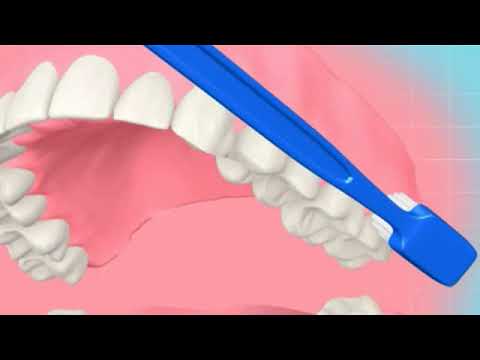
[ edit ]Tooth decay is largely preventable, and fluoride is the cornerstone of prevention: it can stop decay from progressing and even reverse early decay.[3] The World Health Organization recommends brushing twice a day with fluoride toothpaste containing 1,000 to 1,500 ppm fluoride, and notes that adequate exposure to fluoride — from fluoridated drinking water and oral hygiene products — is essential.[4] Other preventive measures include cleaning between the teeth daily with floss or interdental brushes, limiting sugary foods and drinks and reducing snacking, avoiding tobacco, and attending regular dental check-ups and professional cleanings.[3] Dental sealants can be applied to the chewing surfaces of children's back teeth to help prevent decay.[3]
🍬 Diet and Tooth Decay
[ edit ]Sugar is the main dietary driver of tooth decay. Plaque bacteria convert free sugars — sugars added to food by the manufacturer, cook or consumer, plus sugars naturally present in honey, syrups and fruit juices — into acids that destroy the tooth over time.[4] The risk of decay depends not only on how much sugar is eaten but also on how often: frequent eating or drinking, especially of sugary items, repeatedly exposes the teeth to acid. Reducing the frequency of eating between meals and choosing water instead of sugary drinks lowers the risk.[4] The World Health Organization promotes a balanced diet low in free sugars and high in fruit and vegetables, favouring water as the main drink.[4]
🏫 Oral Health Measures in Hong Kong
[ edit ]Hong Kong has a long history of public health measures against tooth decay. Domestic water has been fluoridated since 1961, and the fluoride concentration is now 0.5 parts per million (ppm); drinking tap water therefore provides a source of fluoride, and fluoridation has greatly reduced the incidence of tooth decay.[1] Since 1980, the Department of Health's School Dental Care Service has provided primary school pupils with annual oral examinations, basic dental treatment and preventive care.[5] In September 2026 the government launched the Pre-school Children Oral Health Outreach Programme, offering kindergarten children free oral examinations, oral health risk assessment and fluoride application as needed.[7] The Faculty of Dentistry of the University of Hong Kong plays a central role in local dental education and research.[6] The 2021 Oral Health Survey found that the 2021 Oral Health Survey found that tooth decay has become less prevalent and that older adults are retaining more teeth, showing that these measures are effective even though tooth decay remains common.[9]
🔬 Recent Research
[ edit ]Recent work on tooth decay has shifted from repair towards prevention. In 2021 the World Health Assembly adopted a resolution on oral health, followed by the Global Strategy on Oral Health in 2022 and the Global Oral Health Action Plan 2023–2030, which urge countries to move from a traditional curative model towards risk assessment and early prevention.[4] Silver diamine fluoride (SDF) has become an increasingly important clinical tool: when applied to a decayed tooth it arrests the decay, and it is particularly useful for young children who cannot yet cooperate with fillings; the treated area turns permanently black, indicating that the decay is under control.[8] Hong Kong's Pre-school Children Oral Health Outreach Programme uses sodium fluoride to prevent decay in caries-free children and silver diamine fluoride to control existing decay.[7][8] The Faculty of Dentistry of the University of Hong Kong also plays a key role in community programmes for young children's dental health and in local research on caries prevention.[6]
🀄 Traditional Chinese Medicine Perspective
[ edit ]Traditional Chinese medicine (TCM) has long recognised tooth decay, historically calling it "worm tooth" (蟲牙) in the belief that worms ate into the teeth. In TCM theory, "the kidney governs the bones and the teeth are the surplus of the bones", meaning the strength of the teeth is closely linked to the vigour of kidney qi. Tooth decay is understood in terms of internal disharmony — such as kidney deficiency or stomach heat — combined with an excessive diet of sweet, greasy and spicy foods that causes damp-heat to rise and attack the teeth. TCM management therefore emphasises clearing heat, nourishing yin and tonifying the kidney, together with oral hygiene habits such as rinsing after meals and eating less sweet food. However, TCM does not directly "fill" a cavity; once decay has formed, it should still be treated by a dentist, with TCM serving as a supporting, whole-body approach.
🚨 When to See a Dentist
[ edit ]Because early decay causes no symptoms, regular dental check-ups (typically every six to twelve months) are important even when nothing hurts.[2] See a dentist promptly if you have persistent or sudden toothache, sensitivity when eating or drinking, a visible or feelable hole or dark spot on a tooth, swollen or painful gums, a dental abscess, facial swelling or fever.[2][3] Children should begin regular dental check-ups once their first tooth appears.[5]
❓ FAQ
[ edit ]💡 Q: Can tooth decay heal on its own?
A: In the very earliest "white spot" stage, fluoride and minerals from saliva can remineralise the tooth and halt decay, but once a cavity has formed the tooth cannot repair itself and must be treated by a dentist.[3]
Q: How much fluoride should my toothpaste contain?
A: The World Health Organization recommends brushing twice daily with toothpaste containing 1,000 to 1,500 ppm fluoride.[4]
💡 Q: When should children start brushing?
A: As soon as the first tooth appears, using a smear (rice-grain-sized) amount of fluoride toothpaste, with a parent helping until the child can brush properly.[3]
💡 Q: Is Hong Kong's water fluoridated?
A: Yes. Hong Kong has fluoridated its water since 1961, and the current fluoride concentration is 0.5 ppm, providing a source of fluoride that helps prevent decay.[1]
📚 參考資料
[ edit ]- 《香港衞生署口腔健康教育事務科》:〈護齒秘訣——食水〉(2026)
- 《NHS》:〈Tooth decay〉(2026)
- 《美國國立牙科及顱顏研究所(NIDCR)》:〈Tooth Decay〉(2026)
- 《世界衞生組織(WHO)》:〈Oral health〉(2026)
- 《香港衞生署》:〈學童牙科保健服務〉(2026)
- 《香港大學牙醫學院》:〈官方網站〉(2026)
- 《香港衞生署》:〈學前兒童口腔健康外展計劃——計劃簡介〉(2026)
- 《香港衞生署》:〈學前兒童口腔健康外展計劃——常見問題〉(2026)
- 《衞生署衞生防護中心》:〈擁有口腔健康 才有整體健康〉(2026)
- 《MedlinePlus》:〈Tooth Decay〉(2026)
🎥 Videos
3 related videos · click to play
 Play