廣東話(繁中)
 English
 簡體中文
Dom Pérignon largely invented the idea of the prestige cuvée: the best lots bottled separately, made only in good years, in a distinctive bottle, at several times the price. Rival houses later copied the formula.
🍇 Grapes and origins
[ edit ]The name honours the cellar master of Hautvillers Abbey, who arrived in 1668 and died in 1715. He advocated lower yields, gentle pressing and stronger English glass sealed with cork[4][5]. Historians have long shown he did not invent sparkling wine — instructions for the process were documented in England by 1662, before his arrival[4] — and the brand does not claim otherwise.
The trademark belonged to Champagne Mercier and was never used; it passed to Moët in 1927 as part of Francine Durand-Mercier's dowry when she married into the Chandon family[2][5]. The 1921 vintage shipped to New York on the SS Normandie in 1936. A year earlier, 300 bottles of the 1926 had been sold to the British importer Simon Brothers for its centenary, in bottles and labels almost identical to the future Dom Pérignon but without the name[2][5].
Vinification avoids malolactic fermentation to keep acidity high; Pinot Noir provides structure and Chardonnay finesse, with the blend varying between roughly 40% and 60% of each[4][5]. Fruit comes from Grand Cru villages except the Hautvillers plot, which is Premier Cru — hence no Grand Cru designation on the label[3].
🌍 Where it comes from
[ edit ]Grapes come from three core areas: the Montagne de Reims and Aÿ for Pinot Noir, the Côte des Blancs for Chardonnay. Villages include Chouilly, Cramant, Avize and Le Mesnil-sur-Oger for Chardonnay, and Aÿ, Bouzy, Mailly, Verzenay and Hautvillers for Pinot Noir[3]. Champagne's cool northerly climate and deep chalk soils keep acidity and minerality high — the basis for long ageing[6].
Richard Geoffroy was chef de cave from 1990 to 2018; Vincent Chaperon succeeded him. The brand has its own winery and team, separate from Moët & Chandon[5].
👃 Aromas and palate
[ edit ]Young vintages show white flowers, citrus, green apple, almond and brioche, with a very fine bead and linear acidity[4]. With age come honey, fig, roasted nuts, butter and a hint of mushroom, the texture rounding out. Alcohol is usually about 12.5%. Serve at 8–10°C; a tulip or white-wine glass reveals far more aroma than a narrow flute.
🍷 Vintages and ageing
[ edit ]Dom Pérignon is made only when quality allows; dozens of vintages have been released between 1921 and 2017, including the rare run of 2002–2006[5]. Beyond the standard bottling there are P2 (Second Plénitude) and P3 (Third Plénitude), aged on lees for roughly 15 and 25-plus years, gaining breadth and depth[5]. At home in Hong Kong, store at a steady 12–14°C, away from light and vibration; Champagne suffers more from temperature swings than still wine.
🍽️ Food pairing
[ edit ]High acidity and a fine bead make it more versatile than expected. Classics are oysters, caviar and lobster; locally, steamed garoupa, poached prawns, crispy fried chicken (the bubbles cut the fat) and dim sum such as har gow and siu mai all work. Avoid very sweet dishes and heavy black-pepper sauces, which swamp the mid-palate. At a Chinese banquet, pour it with the opening seafood and chicken courses.
🛒 Buying and prices
[ edit ]In Hong Kong the 2015 vintage in 750 ml ranges from about HK$1,350 to HK$1,691 across merchants[7]; department stores and duty-free are dearer, independent merchants and online cheaper. Check whether a gift box is included — in Hong Kong gift packaging typically adds 5–10% — and which vintage you are buying, since 2012, 2013 and 2015 differ in style. Older vintages and P2/P3 are sold mainly at auction and by specialist merchants at multiples of the standard price.
For everyday drinking the standard vintage is ample; for cellaring or gifting, P2 shows more aged character but carries a clear premium, so compare quotes.
🥂 Occasions and serving
[ edit ]In Hong Kong, Dom Pérignon appears most often at weddings, corporate anniversaries and festive gifting. Chill for at least three hours, rest the bottle briefly after removing it, and pour slowly down the side of the glass, filling a third to let the aromas open. A Champagne stopper keeps fizz for a day or two, but flavour fades; do not keep it longer. For gifts, most merchants offer boxes and cards; in summer, ask for chilled delivery so the wine does not sit in a hot van.
❓ FAQ
[ edit ]Q: How is it different from Moët Impérial?
A: Moët Impérial is a non-vintage blend built on fruit and approachability; Dom Pérignon is vintage-only, aged far longer, with more acidity and complexity[5].
💡 Q: Does it need ageing?
A: No. The standard vintage is released after about 8–10 years on lees and is ready to drink; another 10–20 years adds honey and roasted nut notes[5].
Q: Why do vintages vary so much in price?
A: Volume, critical reception and demand; great years such as 2008 and 2012 command more.
Q: Supermarket or wine shop in Hong Kong?
A: Supermarket promotions can be cheap but storage may be imperfect; specialists usually hold temperature-controlled stock at a slightly higher price and lower risk[7].
🏆 Collecting, auction and the local market
[ edit ]Dom Pérignon is a fixture at auction, especially 1960s–1980s vintages and the P2 and P3 releases. Prices depend on provenance, storage, fill level and packaging, and the same wine can differ several-fold. Hong Kong buyers should note that Champagne is highly sensitive to light and temperature; auction lots without cold-chain records carry more risk.
At retail, beyond department stores and duty-free, specialist merchants and online platforms keep steady stock. Check three things: whether the vintage is clearly stated, whether the original gift box is included, and whether chilled delivery is offered. For gifting, the boxed version reads better; for cellaring, vintage and storage matter more.
Locally it appears most at weddings and corporate dinners. Chill for at least three hours, then let the bottle stand briefly before opening so the mousse is finer. Pour slowly down the side of the glass, filling a third to a half so the aromas gather.
📚 References
[ edit ]- Dom Pérignon official website (Hong Kong)
- The Finest Bubble: Dom Pérignon — vintages and history
- Champagne 411: Dom Pérignon history
- GrapeGuru: Dom Pérignon — history, style, plénitude and vineyards
- FINE+RARE: Dom Pérignon Champagne
- Comité Champagne
- SOGO Hong Kong: Dom Pérignon 2015 with box 750ml (HK$1,691)
🎥 Videos
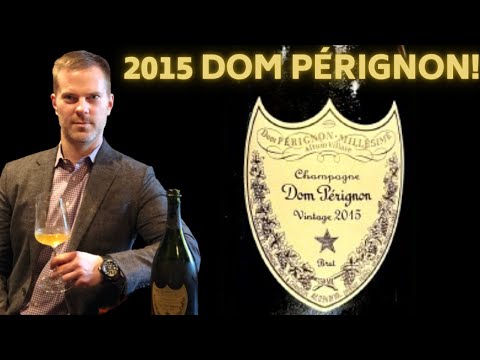
4 related videos · click to play
 Play