廣東話(繁中)
 English
 簡體中文
🥃 Brand and sources
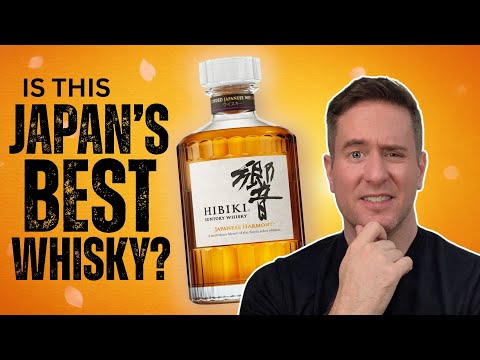
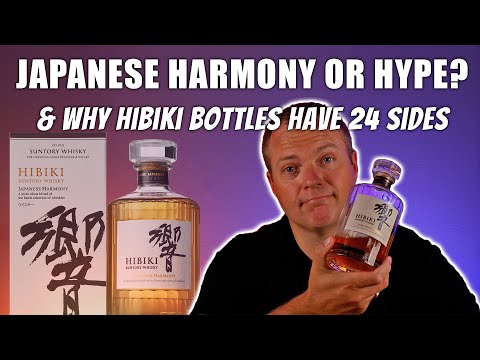
[ edit ]Hibiki is unusual: a blended whisky treated with the seriousness of a single malt. The brand launched in 1989 to mark Suntory's 90th anniversary, and the 24 facets on the bottle correspond to the 24 traditional Japanese seasons[3]. Japanese Harmony is the entry point to the range, with no age statement, built to demonstrate blending craft.
It is not a single distillery: the blend draws on Yamazaki in Osaka, Hakushu in the Yamanashi forest and Chita in Aichi, which makes grain whisky. Suntory describes Japanese Harmony as at least ten malt and grain whiskies matured in five different cask types[1].
🌾 Malt and distillation
[ edit ]The malt comes from the pot stills at Yamazaki and Hakushu; the grain comes from Chita's continuous stills. Suntory calls the grain the "dashi", the stock that binds the malts into one character[1]. The bottling is 43%[1][3], above the 40% common in Scotch blends, which keeps the aromatics intact while staying soft.
🛢️ Casks and maturation
[ edit ]Five cask types are used: American white oak as the base, Mizunara and sherry casks as the "dressing", plus a small share of peated malt for accent[1]. Mizunara gives sandalwood and coconut, sherry gives dried fruit and sweetness, and the peated component is so small that smoke barely registers. No age statement does not mean young — the blend relies on whiskies of different ages to hold a consistent style[1].
👃 Nose and palate
[ edit ]Official notes: honey-like sweetness, candied orange peel and white chocolate on the nose; rose, lychee, a hint of rosemary, mature woodiness and sandalwood on the palate; a subtle, tender, long finish with Mizunara[1][3]. In the glass, flowers and honey lead, then lychee and citrus, with sandalwood and wood at the end. It is an elegant rather than a powerful style — no sweetness cloying, no heavy peat.

🥤 How to drink it
[ edit ]Neat at room temperature shows the floral and sandalwood layers. Suntory recommends a hand-carved ice ball, marugori, which melts slowly and lowers the temperature gradually[3] — the standard Japanese bar serve. A highball with three parts soda suits sushi, tempura and yakitori. With Cantonese food, steamed fish, soy chicken and prawn dishes work best; heavy braises drown the delicate aromatics.
🛒 Buying and price in Hong Kong
[ edit ]In November 2026 The Club listed HK$820 (from HK$1,580), WhiskyChill HK$850 and Sogo HK$1,311[2][3][4] — a spread of over HK$400 for the same bottle. Check you are buying Japanese Harmony rather than the 12, 17 or 21 Year Old, which cost several times more; limited artistic editions carry the same liquid at a premium; and buy expensive bottles from established merchants.
❓ Frequently asked
[ edit ]💡 Q: Is it a single malt?
A: No — it is a blend of malt and grain whiskies[1].
Q: Does no age statement mean lower quality?
A: No. It means the blender uses whiskies of various ages to hit a target style rather than relying on one age[1].
💡 Q: How does it compare with Yamazaki 12?
A: Yamazaki 12 is a single malt with more concentrated fruit and a much higher price; Harmony is more floral, softer and far cheaper.
💡 Q: Good as a gift?
A: Yes — the 24-facet bottle is recognisable and the price sits in the middle band that suits corporate and festival gifting.
📚 References
[ edit ]- The House of Suntory: "Hibiki Japanese Harmony" (blend structure, five cask types)
- The Club: "Hibiki Harmony 70cl with box" (HK$820)
- WhiskyChill: "Hibiki Hong Kong prices 2026"
- Sogo online: "Hibiki Japanese Harmony 700ml" (HK$1,311)
- Spiritory: "Hibiki Japanese Harmony: The Art of Japanese Harmony in a Bottle"
- Suntory Global Spirits: official Hibiki Japanese Harmony release (43%, tasting notes)
🎥 Videos
4 related videos · click to play
 Play