 廣東話(繁中)
 English
 簡體中文
💡 Quick answer: Madeira is fortified wine from the Portuguese island of Madeira, known for deliberate heating that recreates the effect of long sea voyages in the tropics. The four noble grapes run from driest to sweetest as Sercial, Verdelho, Boal and Malvasia. Because the wine is already oxidised and heated, an opened bottle keeps for more than a year, making it one of the most durable wines in the world.
Madeira is a niche within a niche in Hong Kong, yet it does two things almost no other wine can. First, it does not spoil after opening, often lasting a year or more. Second, its acidity is so high that even the sweetest styles never cloy. For a household where one person drinks and a bottle must last, that is genuinely practical.
🍇 Grapes and origins
[ edit ]Madeira is a Portuguese island in the Atlantic with Funchal as its capital. Wine was exported from the sixteenth century, and the long sea journey through tropical heat and slow oxidation did not ruin it: it turned into something with caramel and dried fruit character. Producers later recreated the process deliberately with artificial heat.
Tinta Negra covers about 85% of plantings because it is productive and resistant, though quality is modest. The four noble whites are Sercial, Verdelho, Boal and Malvasia (Malmsey), whose names appear on the label and whose residual sugar rises in exactly that order. Terrantez survives in tiny quantities and commands the highest prices.
🌍 Key regions
[ edit ]About 65% of the island is slope, so vineyards are terraced, mostly at altitude and worked entirely by hand, which keeps costs high. Soils are basaltic and poor but free-draining, and the humid subtropical climate forces growers to train vines high on trellises for airflow and to limit fungal disease.
Lodges are concentrated around Funchal and the south of the island. Justino is among the largest houses, producing around four million litres a year and buying grapes from some 1,500 small growers.
👃 Aromas and palate
[ edit ]Typical aromas are caramel, smoke, dried fruit, nuts, orange peel and coffee, with sweetness running from dry Sercial to rich Malvasia. Acidity is the signature: even the sweetest Malvasia stays bright, which is why the wine never feels heavy.
The grapes differ clearly. Sercial is the driest with lemon and almond; Verdelho sits in the middle with smoke and honey; Boal is rounder with caramel and dried fruit; Malvasia is the richest with coffee and treacle.
🍷 Ageing and grades
[ edit ]There are three maturation routes. Estufagem puts the wine in stainless tanks wrapped with hot-water pipes at about 55°C for 90 days, used for volume. Armazem de calor keeps wooden casks in a steam-heated room at 30–40°C for six to twelve months, a gentler method. Canteiro relies only on natural solar heat, with casks aged indoors for at least 20 years and the highest quality.
Grades run from five-year Reserve through 10-year Special Reserve and 15-year Extra Reserve to 20, 30 and 40 years. Colheita ages at least five years and Vintage at least 20 in cask. Because oxidation is already complete, an open bottle keeps a year or more, and longer in the fridge.
🍽️ Food pairing
[ edit ]Serve by sweetness: Sercial and Verdelho at 10–12°C with grilled fish, caviar, olives and walnuts; Boal at 13–16°C with fruit tarts and fruit cake; Malvasia at 16–18°C with chocolate and puddings.
On a Chinese table, Sercial works with steamed fish and blanched prawns, Verdelho with roast meats and braised dishes, and Malvasia with mooncakes and dark chocolate. Few wines can cover both the starter and the dessert, and the acidity is the reason. Avoid clear soups and delicate sashimi.
🛒 Buying and prices
[ edit ]In Hong Kong, Madeira is sold mainly through online shops and specialist cellars rather than supermarkets. Prices span an enormous range from basic three to five year styles to 20-year Canteiro, with Vintage and nineteenth-century stocks trading at auction levels. Three checks: first the grape name, with Sercial the driest and Malvasia the sweetest; second the age statement, where 5, 10 and 15 years are blended averages while Colheita and Vintage are single years; third the maturation method, since Canteiro usually signals the highest quality.
Start with a five-year Verdelho or a 10-year Boal, and consider 500 ml bottles for a small household. Because the wine keeps, it can be enjoyed slowly rather than finished in a week like most fortified wines.
❓ FAQ
[ edit ]💡 Q: How is Madeira different from Port?
A: Both are Portuguese fortified wines, but Madeira is deliberately heated and oxidised, giving caramel and smoke, and it keeps for a year after opening, whereas Port fades within days or weeks.
💡 Q: Why does it keep so long?
A: Heat and oxidation have already changed the wine, so further exposure to air barely alters it.
💡 Q: Is Sercial the sweetest?
A: The opposite. Sercial is the driest; Malvasia, also called Malmsey, is the sweetest.
💡 Q: Colheita or Vintage?
A: Both are single years. Colheita ages at least five years in cask and Vintage at least 20, giving a more concentrated and rarer wine.
🎥 Videos
5 related videos · click to play
 Play
-
 What is Madeira Wine? | Madeira Wine Tasting at BlandysInner Alchemy
-
 Wine Tasting in Madeira | Blandy's vs Quinta do BarbusanoJared Dillingham
-
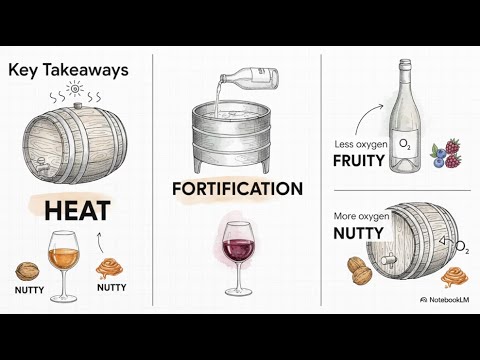 Port & Madeira - WSET Wine Study GuideCru - Wine Education
-
 IN THE MOOD FOR MADEIRA: PART 2 | Food & Wine Travel Guide | Best Places to Visit Madeira, PortugalIn the Mood for Life