廣東話(繁中)
 English
 簡體中文
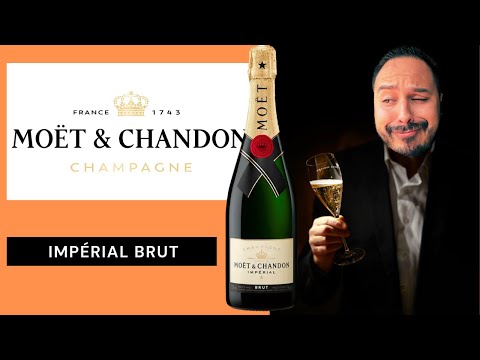
If Dom Pérignon represents the top of Champagne, Moët Impérial represents the everyday: huge volume, steady supply, accessible pricing, and for many drinkers the first Champagne they ever taste.
🍇 Grapes and origins
[ edit ]Claude Moët was a wine merchant in Épernay who founded Moët et Cie in 1743 and shipped his wine to Paris[2][4]. His grandson Jean-Rémy Moët took the brand international, counting Napoleon and Thomas Jefferson among customers[4][6]. In 1833 Pierre-Gabriel Chandon de Briailles, Jean-Rémy's son-in-law, joined and the firm became Moët & Chandon[2][4]. A first vintage followed in 1842 and Brut Impérial in 1869[4].
Impérial leans on Pinot Noir for fruit and structure, Meunier for roundness and early-drinking charm, and Chardonnay for finesse and acidity; published ratios differ slightly, broadly 30–40% Pinot Noir, 30–40% Meunier and 20–30% Chardonnay[5][6]. The house owns about 1,190 hectares in Champagne, among the largest holdings in the region[4].
It belongs to LVMH alongside Dom Pérignon, Krug and Veuve Clicquot, though each house operates independently[2].
🌍 Where it comes from
[ edit ]The headquarters sit on Avenue de Champagne in Épernay, with fruit drawn from villages across the Montagne de Reims, Vallée de la Marne and Côte des Blancs[4][6]. Chalk soils and a cool climate keep acidity high. Moët's cellars run more than 28 kilometres underground at a steady 10–12°C — among the largest in the region and well suited to long ageing.
👃 Aromas and palate
[ edit ]Impérial Brut shows green apple, pear, citrus and white flowers with a touch of brioche and cream; the palate is bright and lively with a clean finish[5]. Alcohol is about 12% and dosage around 9 g/L, a standard brut profile[7]. It aims at consistency and approachability rather than complexity — which is exactly why it sells in such volume.
🍷 Vintages and ageing
[ edit ]Impérial is non-vintage, blended afresh each year to a constant style. It is best within three to five years of release; older bottles lose fruit and keep only acidity. At home in Hong Kong, keep it in the fridge or a wine cabinet away from light and temperature swings. For cellaring, choose Moët Vintage or Dom Pérignon rather than the non-vintage.
🍽️ Food pairing
[ edit ]Impérial is close to all-purpose: sushi, oysters, fried food, salad, even burgers. Locally it works with dim sum — har gow, siu mai, fried spring rolls — and with hotpot in a clear broth, where the bubbles cut richness. Avoid very sweet dishes such as sweet-and-sour pork, or heavily spiced curries, which make the wine taste thin.
🛒 Buying and prices
[ edit ]Hong Kong prices vary widely: supermarket promotions can bring a 750 ml bottle down to about HK$269–328, while convenience stores and duty-free sit at HK$346–425[7]. Check whether a gift box is included, the format (200 ml, 375 ml and 1.5 L are all sold) and how long the promotion runs. Larger bottles are cheaper per millilitre and suit parties; small ones suit solo drinking.
Watch storage: bottles that have sat under shop lights for months taste duller. Look for a disgorgement date or lot number where available, and buy from shops with fast turnover.
🏷️ Reading the label
[ edit ]The range is broad: Impérial Brut, Impérial Rosé, Nectar Impérial (sweeter), Ice Impérial (served over ice) and Moët Vintage. "Brut" means dry (0–12 g/L dosage), "Demi-Sec" noticeably sweeter — decide which you want first. Limited-edition gift boxes and collaborations use the same wine and typically cost 10–20% more; worth it as a gift, less so for everyday drinking.
❓ FAQ
[ edit ]Q: How is Moët Impérial related to Dom Pérignon?
A: Both are LVMH; Dom Pérignon is a separate brand under Moët & Chandon, vintage-only and aged far longer[2].
Q: How long can non-vintage Champagne keep?
A: Best within three to five years; not a long-term cellaring wine.
Q: Why such a price gap between supermarkets and wine shops?
A: Different sourcing, promotions and storage; supermarkets sometimes run volume deals but storage may be imperfect[7].
💡 Q: Is Impérial sweet?
A: The Brut is dry, with about 9 g/L dosage; it tastes fruity but is not a sweet wine[7].
🎉 Parties, large formats and brand extensions
[ edit ]In Hong Kong, Moët Impérial is above all a celebration wine, which makes large formats — magnum (1.5 L) and jeroboam (3 L) — popular. They are cheaper per millilitre and lose their bubbles more slowly, ideal for sharing; the drawback is finishing the bottle, so a good stopper matters.
The range has expanded: Ice Impérial is designed to be served over ice, Nectar Impérial is sweeter, and the Rosé targets weddings and Valentine's Day. These differ in style from the standard Brut and cost more, so decide on sweetness and serve style before choosing packaging.
For corporate buyers, many Hong Kong companies order by the case as client gifts and ask for branded labels or cards. For volume, going direct to the distributor beats retail, but check lead times — supply tightens around Christmas and Lunar New Year.
🧊 Serving temperature and ice
[ edit ]Serving temperature is often overlooked. Impérial Brut shows its fruit best at 8–10°C; warmer and the alcohol dominates, colder and the aromas shut down. In a Hong Kong summer the wine climbs back toward room temperature within minutes of leaving the fridge, so an ice bucket helps — but do not leave it in too long.
As for ice, Ice Impérial is designed for it: sweeter, slightly lower in alcohol, still balanced over ice. Adding ice to the standard Brut dilutes it and kills the mousse, so avoid that. For a colder serve, chill the glasses or take the bottle down to 6–8°C before pouring.
Glassware matters: narrow flutes look festive but concentrate little aroma, while tulips or white-wine glasses keep the fruit and brioche notes. Many local restaurants still use flutes, so bringing your own two glasses makes a real difference.
On quantity, a 750 ml bottle gives six to eight glasses of 90–120 ml. At a Hong Kong banquet table of ten, expect two to three bottles depending on what else is being poured.
📚 References
[ edit ]- Moët & Chandon official website
- LVMH: Moët & Chandon
- Comité Champagne
- GrapeGuru: Moët & Chandon
- Enterwine: Moët & Chandon
- Millésima Hong Kong: Moët & Chandon Brut Impérial (HK$392 per bottle)
- Open Bottle Hong Kong: Moët & Chandon Brut Impérial NV 750ml (HK$318)
🎥 Videos
4 related videos · click to play
 Play