廣東話(繁中)
 English
 簡體中文
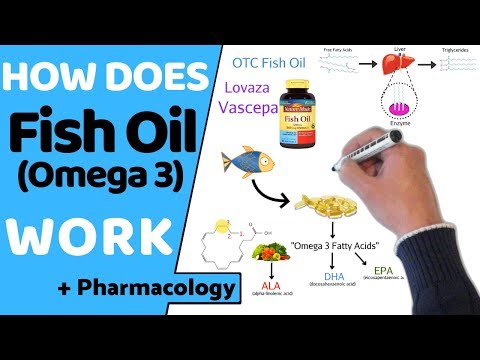
Omega-3 fatty acids are a family of polyunsaturated fats that are essential for human health. Because the body cannot make them in adequate amounts — and cannot make the parent compound at all — they must come from the diet. The three that matter most are alpha-linolenic acid (ALA), found in plants, and the long-chain marine forms eicosapentaenoic acid (EPA) and docosahexaenoic acid (DHA).[1] In Hong Kong, most people obtain omega-3 from fish and fish-oil supplements, but how much to eat and who should be careful are questions with plenty of nuance.
🐟 What Are Omega-3 Fatty Acids?
[ edit ]Omega-3s are polyunsaturated fats named for the position of their first double bond, three carbon atoms from the methyl end of the molecule. The three main forms are:
💡 ALA (alpha-linolenic acid) — an "essential" fatty acid that the body cannot synthesise, so it must come from food. It is found mainly in plants, such as flaxseed, chia seeds, walnuts, rapeseed (canola) oil and soybean oil.[1][7]
EPA (eicosapentaenoic acid) and DHA (docosahexaenoic acid) — the long-chain "marine" omega-3s, which are particularly important for the heart, blood vessels, brain and retina.[1]
The body can convert a small amount of ALA into EPA and DHA, but the conversion rate is very low (generally only a few per cent), so the most practical way to obtain sufficient EPA and DHA is to eat oily fish or take a supplement.[1][7]
🍽️ Dietary Sources
[ edit ]The richest marine sources (EPA and DHA):
- Oily fish: salmon, mackerel, sardines, herring, trout, saury and tuna.[3][4]
- Other seafood: oysters, mussels and krill, as well as algal oil derived from microalgae.
Plant sources (ALA):
- Flaxseed and flaxseed oil, chia seeds, walnuts, rapeseed oil, soybean oil and edamame.[1][7]
The Hong Kong Centre for Food Safety's Total Diet Study found that bighead carp, pomfret, minced dace, salmon, grey mullet, sole fillet and grass carp contain relatively low levels of methylmercury, making them more suitable for pregnant women and young children in moderate amounts.[8][9]
📏 Recommended Intake
[ edit ]The UK National Health Service (NHS) advises most adults to eat two portions of fish a week, one of them oily (a portion is around 140 g).[3]
In the United States, the adequate intake (AI) for ALA is about 1.6 g a day for adult men and 1.1 g for adult women.[1] There is no single recommended amount for EPA and DHA, but the American Heart Association (AHA) advises people without heart disease to eat fish — especially oily fish — twice a week, and recommends about 1 g of EPA plus DHA a day, under medical guidance, for people with coronary heart disease.[4]
The Hong Kong Centre for Food Safety recommends eating one to two portions of fish a week (a portion is about 150 g) and varying the types of fish to spread the risk.[8]
💊 Supplement Types and Dosage
[ edit ]The common omega-3 supplements on the market fall into several groups:
- Fish oil — the most common, containing EPA and DHA.
- Krill oil — extracted from Antarctic krill.
- Algal oil — extracted from microalgae, suitable for vegetarians and pregnant women and free of concern about fish contamination.
- Cod liver oil — contains EPA and DHA plus large amounts of vitamins A and D; pregnant women should be especially careful about excessive vitamin A intake.[2]
For general health, about 250–500 mg of EPA plus DHA a day is sufficient. To lower triglycerides, a doctor may prescribe high-concentration, high-dose (2–4 g a day) pharmaceutical omega-3.[4][5]
Note that ordinary fish-oil capsules are treated in Hong Kong as health supplements or food and do not require drug registration, whereas the registration status of high-concentration pharmaceutical omega-3 (such as icosapent ethyl) in Hong Kong could not be verified; such products should only be used on prescription.
❤️ Cardiovascular and Health Effects
[ edit ]💡 Effects with stronger evidence:
- Lowering triglycerides: high doses (2–4 g a day) of EPA or EPA plus DHA can significantly lower blood triglycerides, and prescription-grade omega-3 has been shown in a large trial to reduce cardiovascular events in high-risk patients.[5]
- Heart health: eating fish, especially oily fish, is associated with a lower risk of heart disease, which is why the AHA recommends eating fish regularly.[4]
Claims that are unproven or weakly supported:
- Prevention of cardiovascular disease in the general population: a large 2018 Cochrane review found that additional omega-3 supplementation in the general population had "little or no effect" on overall mortality and cardiovascular events, so it should not be treated as a universal heart medicine.[6]
- Effects on arthritis, cognitive decline or dementia, depression and dry eye: some smaller studies show positive signs, but the evidence is inconsistent and not strong enough for a routine recommendation.[1][7]
⚠️ Side Effects and Contraindications
[ edit ]Common side effects are usually mild and include a fishy aftertaste or bad breath, heartburn, indigestion, nausea, loose stools and rash.[1][2]
Contraindications and risks to note:
- People allergic to fish or shellfish should not take fish oil and may consider algal oil instead.
- High doses (more than 3 g a day) may increase the tendency to bleed; anyone preparing for surgery, with a bleeding disorder, or taking anticoagulants should consult a doctor first.[1][2]
- Cod liver oil contains large amounts of vitamin A; excessive vitamin A intake in pregnancy can harm the fetus, so cod liver oil should be avoided during pregnancy in favour of algal oil or a doctor-recommended supplement.[2]
🩸 Interactions with Anticoagulants
[ edit ]Omega-3 fatty acids have a mild anti-platelet effect, so in theory taking them together with blood-thinning drugs — particularly warfarin — could increase the risk of bleeding. Although some research suggests that fish oil at ordinary doses (below 3 g a day) may not markedly affect clotting, people taking warfarin, aspirin or other blood thinners should always tell their doctor before starting a fish-oil supplement and may need regular blood tests (INR monitoring).[1][2]
🀄 Traditional Chinese Medicine Perspective
[ edit ]Traditional Chinese medicine (TCM) has no concept of "omega-3", but understands similar foods through the lens of nourishing yin and moistening dryness, strengthening the spleen and kidneys, and nourishing the blood and eyes. Oily fish such as salmon and mackerel are generally regarded in TCM as warming and rich in essence and blood, benefiting those who are weak or deficient in qi and blood; however, TCM also cautions that too much rich, greasy food generates phlegm-dampness, so people with a weak spleen and stomach, heavy dampness or a tendency to loose stools should not overdo it. TCM also stresses moderation and tailoring the diet to one's constitution, which is consistent with modern nutrition's principles of "moderation and variety". (This TCM perspective is traditional experience and has not been confirmed by large-scale clinical trials.)
🩺 When to See a Doctor
[ edit ]For most people, eating fish and taking fish-oil supplements in moderation is safe, but see a doctor in the following situations:
- You take blood thinners (such as warfarin) or have a bleeding disorder.
- You are preparing for surgery (you may need to stop supplements beforehand).
- Your triglycerides are persistently high and you are considering high-dose pharmaceutical omega-3.
- You develop persistent gastrointestinal discomfort after taking fish oil, or an allergic reaction (rash, swollen lips or difficulty breathing).
- You are pregnant or breastfeeding and want to know how much fish to eat and which supplement is safe.
❓ Frequently Asked Questions
[ edit ]💡 Q: How much omega-3 do I need each day?
A: For general health, about 250–500 mg of EPA plus DHA a day is enough, achievable by eating two portions of oily fish a week. If you do not eat fish, consider a supplement, but do not raise the dose too high on your own.[3][4]
Q: Is it safe for pregnant women to eat fish? Which fish should be avoided?
A: Fish contains DHA, which benefits the developing fetal brain and eyes. Pregnant women should eat one to two portions a week of low-methylmercury fish, but avoid large predatory fish such as shark, swordfish, marlin, golden threadfin bream and tuna (especially bigeye and bluefin tuna), which have higher methylmercury levels.[8][9]
Q: Does fish oil thin the blood or interact with blood thinners?
A: High-dose fish oil may have a mild anticoagulant effect, and taking it with warfarin and similar drugs could in theory increase bleeding risk. Anyone on blood thinners should consult a doctor before starting fish oil.[1][2]
💡 Q: How can vegetarians get omega-3?
A: Vegetarians can obtain ALA from flaxseed, chia seeds and walnuts, but the body converts ALA to EPA and DHA very inefficiently. To obtain DHA and EPA directly, choose algal oil derived from microalgae, which is suitable for vegetarians and pregnant women.[1][7]
📚 References
[ edit ]- MedlinePlus: "Omega-3 fats - Good for your heart" (2023)
- NHS: "Vitamins and minerals - Others" (2020)
- NHS: "Fish and shellfish" (2026)
- American Heart Association: "Fish and Omega-3 Fatty Acids" (2024)
- American Heart Association: "Prescription omega-3 fatty acid medications effectively lower high triglycerides" (2022)
- Cochrane: "Omega-3 fatty acids for the primary and secondary prevention of cardiovascular disease" (2018)
- Harvard T.H. Chan School of Public Health: "Omega-3 Fatty Acids: An Essential Contribution" (2024)
- Centre for Food Safety: "Balancing the Benefits and Risks of Eating Fish" (2019)
- Centre for Food Safety: "Metallic Contaminants in Food (Part II) - Methylmercury" (2024)
🎥 Videos
4 related videos · click to play
 Play