廣東話(繁中)
 English
 簡體中文
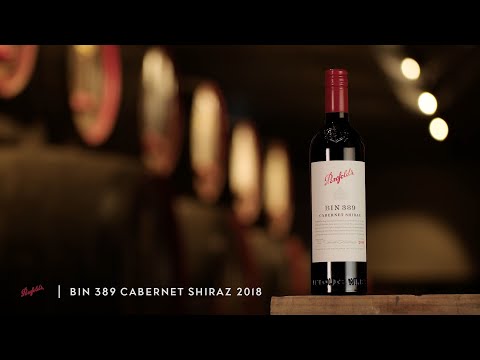
For many Hong Kong drinkers, if you buy one Penfolds, it is Bin 389: a tenth of Grange's price with the same family style and real cellaring potential. It is also one of the most traded wines on the Australian secondary market[1].
🍇 Grapes and origins
[ edit ]Max Schubert became Penfolds' chief winemaker in 1948; after a 1950 trip to Bordeaux he set out to make Australian reds that could age twenty years, starting the Grange experiment in 1951[2]. His aim was not one wine but a "dynasty of wines which all bear an unmistakable resemblance to each other", which produced Bin 28, Bin 128 and Bin 389[2].
In 1953 Schubert added a little Cabernet to Grange; in 1960 he released the first more evenly balanced Cabernet-Shiraz — Bin 389[4]. It helped make Cabernet Shiraz Australia's signature blend, later taken up by Jacob's Creek, Wolf Blass and Hardys[4].
Early vintages drew on Adelaide foothills fruit from Auldana and Magill; after those vineyards were pulled out for housing in the 1970s, Barossa Valley — especially Kalimna — became the dominant source[3].
🌍 Where it comes from
[ edit ]Today Bin 389 is a multi-regional blend from Barossa Valley, Coonawarra, McLaren Vale, Padthaway and Wrattonbully[5]. Each plays a part: Barossa for richness and body, Coonawarra for mint and structure, McLaren Vale for spice. Multi-regional blending is central to Penfolds' philosophy and keeps the style steady each year[2].
👃 Aromas and palate
[ edit ]Expect blackcurrant, blackberry, plum, chocolate, mint, cedar and tobacco, with coconut and vanilla from American oak[5]. The palate is rich, the tannins thick but ripe, acidity medium, the finish long. At about 14.5% alcohol, serve at 16–18°C and give young bottles 45–60 minutes of air.
🍷 Vintages and ageing
[ edit ]Bin 389 is one of Australia's best-known cellaring reds, typically 15–25 years[1]. Strong vintages such as 2010, 2012, 2016 and 2018 fill out with age into leather, tobacco and dried fruit. Storage matters in Hong Kong: sustained room temperatures above 28°C age the wine quickly, so a cabinet at 14–16°C is best.
🍽️ Food pairing
[ edit ]Weight and tannin call for rich meat: roast goose, suckling pig, braised goose slices, beef ribs, lamb chops, black-pepper short ribs. Local dishes such as black-bean spare ribs, pork belly with preserved vegetables and braised pork knuckle in red fermented bean curd also work. Avoid steamed seafood and very spicy Sichuan dishes, where tannin and heat amplify bitterness.
🛒 Buying and prices
[ edit ]Hong Kong prices run about HK$519–750 for 750 ml[7]; supermarket promotions can go lower, while specialists and department stores charge more. Six-bottle cases are typically about 10% cheaper per bottle. Vintage matters — prices can differ by 20–30%.
Against Bin 407, Bin 389 is fleshier and approachable sooner; Bin 407 has more tannin and purer Cabernet character. Against Grange, Bin 389 costs roughly a tenth, with a related style but less complexity.
🏷️ Labels and versions
[ edit ]Labels state Bin 389, the vintage, South Australia and alcohol. Some years get special packaging such as Lunar New Year editions — the wine is the same and the price higher. Both official and parallel imports circulate in Hong Kong with a 10–20% gap; check the importer's back label and, in summer, the shipping conditions. Magnums and larger formats also appear and age more slowly, suiting long cellaring or banquets.
❓ FAQ
[ edit ]💡 Q: Why "Baby Grange"?
A: Part of the wine is matured in American oak barrels previously used for Grange, giving a related style at a fraction of the price[1].
💡 Q: How long can Bin 389 age?
A: Typically 15–25 years depending on vintage and storage[1].
💡 Q: Is the Cabernet-Shiraz ratio fixed?
A: No — recent vintages are about 51% Cabernet and 49% Shiraz, adjusted each year[5].
Q: Which vintage should I buy in Hong Kong?
A: 2016, 2018 and 2019 are well regarded; newer vintages cost less for everyday drinking[7].
🔁 The secondary market and the Grange halo
[ edit ]Bin 389 is one of the most traded wines on the Australian secondary market — not only because of price but because of the Grange connection: the same cellars, some of the same oak, a style laid down by the same legendary winemaker. For collectors it is an affordable entry point into Penfolds' ageing curve.
In Hong Kong, secondary trade runs through auction houses, specialist merchants and collectors. Older vintages from the 1990s and early 2000s surface occasionally, priced on vintage reputation and fill level. Check three things: provenance, whether the original case is intact, and cold-chain records. Summer shipping is the biggest risk — buy in cooler months or insist on a refrigerated van.
🥢 Pairing with Chinese food
[ edit ]The fruit and tannin make Bin 389 versatile at a Chinese table. Roast meats — goose, char siu, crispy pork — have fat that softens tannin; braised dishes such as goose slices, beef shin and tofu echo the wine's mint and cedar notes; heavier dishes like pork knuckle in red fermented bean curd and pork belly with preserved vegetables have the weight to match.
Avoid steamed dishes and very spicy food. The delicacy of steamed fish is buried by a full-bodied red, while chilli dishes combine with alcohol and tannin to produce bitterness and heat. At a mixed table, pour Bin 389 with the meat and roast courses, and switch to white or Champagne for seafood.
Young bottles benefit from 45–60 minutes of air; in a restaurant, ask for the bottle to be opened early or bring a decanter. Serve at 16–18°C — Hong Kong's fierce air-conditioning chills wine quickly, so cup the glass in your hands to bring it back.
🏷️ The distance from Grange
[ edit ]Many ask how far Bin 389 is from Grange. The answer is: same family, different position. Both are Shiraz-led, both use American oak, both are built to age — but Grange selects fruit more strictly, uses more new oak, makes far less and reaches greater complexity. Bin 389 trades some of that for consistency and volume at roughly a tenth of the price.
For most drinkers Bin 389 covers most occasions; Grange is for tasting the house at its limit. To see the difference, open the same vintage of both side by side — it is unmistakable.
📚 References
[ edit ]- Penfolds: Bin 389 Cabernet Shiraz
- Penfolds: Penfolds red winemaking
- Penfolds: The Rewards of Patience (Bin 389 chapter)
- BusinessWorld: Cabernet Sauvignon and Shiraz — the not-so-odd couple
- HOC Wines Hong Kong: Penfolds Bin 389 Cabernet Shiraz 2017 (HK$630)
- Wine Australia
- Wellcome online: Penfolds Bin 389 Cabernet Shiraz 750ml (HK$528)
🎥 Videos
4 related videos · click to play
 Play