廣東話(繁中)
 English
 簡體中文
💡 Quick answer: Port is fortified wine from the Douro region of Portugal, where grape brandy is added mid-fermentation to stop the yeast and keep sweetness, leaving 19% to 22% alcohol. There are two ageing paths: the Ruby family, which preserves fruit, and the Tawny family, aged oxidatively in wood. Vintage Port ages in bottle for 10 to 50 years, while LBV spends four to six years in cask. In Hong Kong retail it starts near HK$99, with a median around HK$500.
In Hong Kong, Port usually appears after dinner beside a cheese board. Sweet, strong and dark, it looks heavy, yet a good 20-year Tawny is genuinely elegant: dried fruit, orange peel, caramel and wood spice, and it matches braised meats and roast meats far better than it matches dessert.
🍇 Grapes and origins
[ edit ]The core grapes are Touriga Nacional, Touriga Franca, Tinta Roriz (Tempranillo), Tinta Barroca and Tinta Cao, all native Douro reds with deep colour, firm tannin and intense aroma.
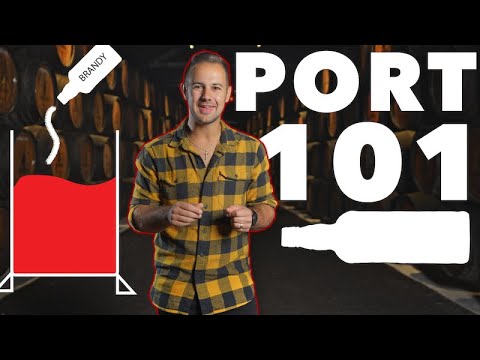
The Douro was demarcated in 1756, making it one of the oldest protected wine regions in the world, earlier than Bordeaux. Winemaking adds grape brandy, the beneficio, to halt fermentation, lifting alcohol to 19% to 22% while retaining residual sugar, so sweetness can be set from very dry to very sweet.
🌍 Key regions
[ edit ]Port must come from the Douro, where vineyards sit on schist terraces above the river, and the wines age and are bottled downstream in Gaia and Porto. There are three sub-zones: Baixo Corgo is cooler and damper with lighter wines; Cima Corgo is the heartland and the source of most Vintage; Douro Superior is the driest and hottest and has improved sharply.
Port divides into red, white and rose. Red runs from deep purple to gold, white from pale yellow to golden as it ages in wood, and rose is a light maceration style with no oxidation.
👃 Aromas and palate
[ edit ]💡 Ruby styles keep a deep ruby colour with red berries, blackberry and chocolate, and firmer tannin. Tawny styles oxidise in wood, turning tea-coloured with dried fruit, walnut, caramel, orange peel and wood spice, and a rounder texture. White Port shows honey, citrus and almond.
Sweetness depends on when the brandy goes in: the earlier the addition, the more sugar remains. Vintage is usually sweeter and more powerful than Tawny, while a 20-year Tawny wins on complexity rather than sugar.
🍷 Styles and ageing
[ edit ]💡 Vintage comes from one year, is bottled two to three years after harvest and then ages in bottle for 10 to 50 years. Once opened it must be finished within days, since it has not been oxidised in wood. LBV is a single year aged four to six years in cask and mostly ready to drink. Colheita is a single-year Tawny with at least seven years in cask. Crusted is a blend held at least three years in bottle and throws a deposit.
Store Vintage lying down, away from light, at 12–15°C. Tawny and LBV keep for weeks after opening because oxidation has already stabilised them.
🍽️ Food pairing
[ edit ]Ruby and Vintage suit dark chocolate, blue cheese and roast beef; Tawny suits creme caramel, almond tart and dried fruit. On a Chinese table, a 20-year Tawny with braised goose, roast goose or honey char siu is excellent, and chilled white Port works with salted peanuts or braised tofu, even as an aperitif.
Avoid delicate seafood and steamed fish, where alcohol and sugar bury the freshness. Serve Ruby and Vintage at 16–18°C and Tawny at 14–16°C.
🛒 Buying and prices
[ edit ]In Hong Kong the category starts at HK$99, with a median near HK$500 and a top end around HK$1,800. Entry Ruby or Ruby Reserve runs HK$100 to HK$200; LBV sits at HK$200 to HK$350; Tawny 10 is about HK$250 to HK$400 and Tawny 20 starts near HK$450; Vintage ranges from HK$600 to several thousand depending on year and house.
Three checks: first the style word, Ruby for fruit and Tawny for complexity; second the age indication, where 10, 20, 30 and 40 years describe the blended average; third whether decanting is needed, since Vintage and Crusted throw sediment. Tawny 10 is the easiest place to start.
❓ FAQ
[ edit ]Q: Is Port just red wine with spirit added?
A: Conceptually close, but the spirit is added mid-fermentation to stop the yeast, keeping sugar while fixing the style at 19% to 22% alcohol.
💡 Q: Vintage or LBV?
A: Vintage ages in bottle for 10 to 50 years and must be finished quickly once opened; LBV spends four to six years in cask and is ready to drink.
💡 Q: How long does an open bottle keep?
A: Tawny and LBV keep two to four weeks; Vintage is best within two to three days.
💡 Q: How is white Port served?
A: Chilled to 8–10°C, either neat or as a Port Tonic with tonic water and mint, a common Portuguese aperitif.
🎥 Videos
5 related videos · click to play
 Play