廣東話(繁中)
 English
 簡體中文
Athlete's foot, known medically as tinea pedis, is a contagious fungal infection of the skin of the feet caused by dermatophyte fungi. It is one of the most common superficial fungal infections worldwide, and is particularly prevalent in warm, humid climates such as Hong Kong.[6] The infection usually begins between the toes and can cause itching, scaling, blisters and cracking. Without treatment it rarely resolves on its own and frequently recurs.[1] This article explains the causes, types, diagnosis, treatment and prevention of tinea pedis.
🔍 What Is Tinea Pedis?
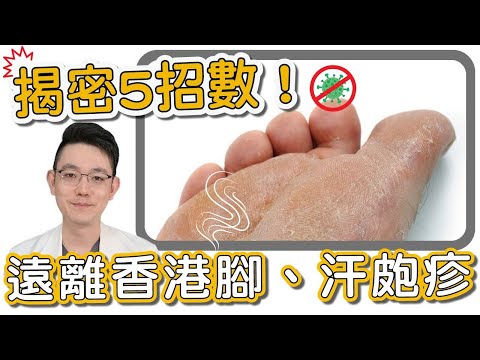
[ edit ]Tinea pedis is a fungal infection affecting the soles, the spaces between the toes and sometimes the toenails. Dermatophyte fungi invade the outermost layer of skin (the stratum corneum) and feed on keratin, which is why the thick, warm, moist skin of the feet is an ideal environment for them.[7] The English name "athlete's foot" reflects the fact that athletes, who often wear enclosed, sweaty footwear, are especially prone to the condition.[3]
🦠 Which Fungi Cause It?
[ edit ]The fungi responsible are dermatophytes, most commonly Trichophyton rubrum and Trichophyton interdigitale.[6] They thrive in warm, moist conditions and spread through direct contact or indirectly via contaminated surfaces and objects, including shared towels, socks, footwear and floors in public showers, swimming pools, gyms and changing rooms.[1][7]
📋 Types of Tinea Pedis
[ edit ]Tinea pedis is classified into several clinical types:[4][5]
- Interdigital: the most common form, typically affecting the fourth and fifth toe spaces with macerated, white, soggy, cracked and scaly skin, often itchy and sore.
- Moccasin (hyperkeratotic): dry, thickened, scaly skin affecting the sole, heel and sides of the foot in a "moccasin" distribution; usually less itchy but more difficult to treat.
- Vesiculobullous: clusters of blisters on the sole or instep that may coalesce, with marked itching.
- Ulcerative: the most severe type, with erosions and ulcers extending from the toe spaces; prone to secondary bacterial infection, especially in people with diabetes or reduced immunity.
⚠️ Symptoms
[ edit ]Common symptoms include itching and burning between the toes, redness, scaling, cracking and maceration of the skin, dry thickened skin on the soles, blisters, and foot odour.[1][2] The infection is unlikely to clear on its own: the fungus continues to multiply in warm, moist conditions, so antifungal treatment is usually required.[1]
🎯 Who Is at Risk?
[ edit ]People at higher risk include those with sweaty feet or who wear enclosed footwear for long periods (such as athletes and workers in safety boots), people with diabetes, those with weakened immunity, frequent users of public pools and gyms, and household members of someone with tinea pedis.[4][7]
🔎 How Is It Diagnosed?
[ edit ]Clinical diagnosis alone is unreliable because conditions such as eczema and psoriasis can look similar.[6] Doctors usually scrape a small amount of skin from the affected area and perform a potassium hydroxide (KOH) wet-mount examination to look for fungal hyphae and spores under the microscope; if necessary, the scrapings are sent for fungal culture.[6]
🩺 Treatment
[ edit ]Antifungal treatment is the mainstay of therapy and may be topical or oral.[6][8]
💡 Topical antifungals (creams, sprays, solutions and powders) are used for mild or localised infections. Common agents include terbinafine, miconazole, clotrimazole, butenafine and tolnaftate.[2] Topical terbinafine and butenafine have been shown to be significantly more effective than placebo (about 3.9 and 5.3 times the cure rate respectively).[6] Treatment is applied once or twice daily for 2–4 weeks, and should be continued for 1–2 weeks after symptoms resolve to prevent recurrence.[1][2]
💡 Oral antifungals are reserved for infections that fail topical treatment, are extensive, or are severe or recalcitrant. Options include terbinafine (250 mg daily for about 2 weeks in adults), itraconazole and fluconazole.[6] These are prescription medicines that require medical supervision and may need monitoring of liver function.[8] In Hong Kong, most topical antifungals are available over the counter, while oral antifungals require a prescription. Steroid creams should never be used on tinea pedis because they can promote fungal growth and worsen the infection.[8]
🌿 Self-Care and Prevention
[ edit ]Good foot hygiene is essential for cure and prevention:[1][2][7]
- Wash the feet daily with soap and dry thoroughly, especially between the toes.
- Wear clean, breathable cotton socks daily and rotate shoes so they can dry out.
- Avoid walking barefoot on floors in public showers, pools and gyms.
- Do not share towels, socks or footwear.
- Avoid scratching itchy areas to prevent spread to the hands or elsewhere.
- If infections recur, use antifungal or drying powder on the feet and inside shoes.
⚠️ When to See a Doctor
[ edit ]Seek medical advice if the condition does not improve after 2–4 weeks of over-the-counter treatment, if there are signs of bacterial infection (redness, swelling, discharge), if the infection spreads to the hands, groin or nails, or if you have diabetes or a weakened immune system.[2][4]
🩹 Complications
[ edit ]If left untreated, tinea pedis can lead to several complications:[4][6]
- Secondary bacterial infection: cracks and macerated skin provide an entry point for bacteria, which can cause cellulitis (a spreading skin infection) or lymphangitis.
- Onychomycosis (fungal nail infection): the fungus can invade the toenails, causing discolouration, thickening and crumbling; nail infections are harder to treat and require longer therapy.
- Spread to other body sites: the fungus can spread to the hands (tinea manuum), the groin (tinea cruris) or elsewhere on the body.
- Recurrence: tinea pedis frequently comes back, especially if footwear and hygiene habits are not changed.
These complications are more common and more serious in people with diabetes or reduced immunity, who should seek medical attention promptly.[4]
❓ Frequently Asked Questions
[ edit ]💡 Q: Is tinea pedis contagious?
A: Yes. It spreads by direct contact or indirectly through shared towels, socks and footwear, and can spread to the hands, groin or nails.[7]
💡 Q: Will it go away on its own?
A: Generally no. The fungus keeps multiplying in warm, moist conditions and requires antifungal treatment.[1]
💡 Q: How long should I use the cream?
A: Usually 2–4 weeks, and continue for 1–2 weeks after symptoms clear to prevent recurrence.[2]
💡 Q: Can I use a steroid cream?
A: No. Steroids weaken the skin's defences and promote fungal growth, worsening the infection.[8]
📚 References
[ edit ]- NHS (UK): Athlete's foot
- MedlinePlus (NIH): Athlete's foot
- DermNet NZ: Tinea pedis (athlete's foot)
- MSD Manual (Professional): Tinea Pedis (Athlete's Foot)
- StatPearls (NCBI): Tinea Pedis
- Leung AKC, et al.: Tinea pedis: an updated review (Cureus)
- Department of Health (HK), Elderly Health Service: Skin fungal infections
- Drug Office, Department of Health (HK): Antifungal medicines
🎥 Videos
3 related videos · click to play
 Play